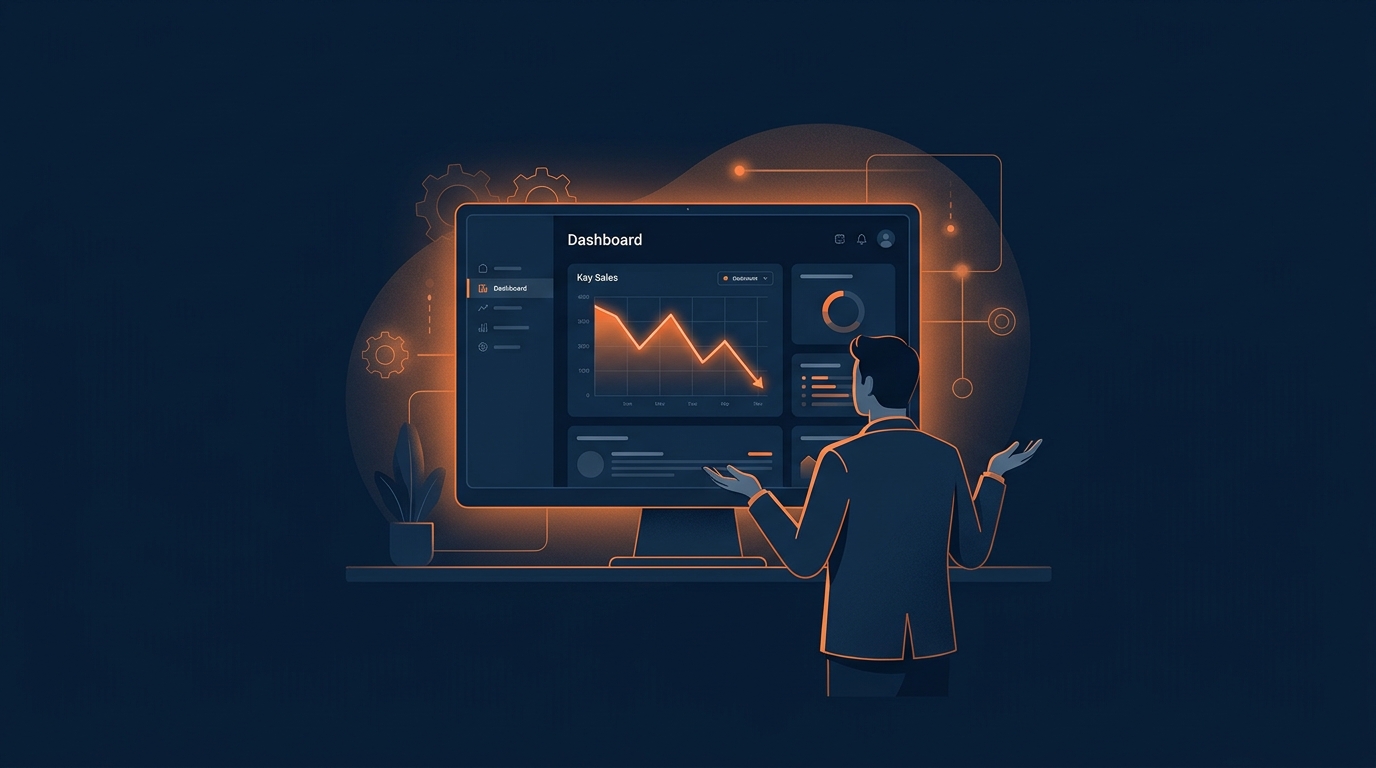
The Dashboard Was Never the Point
For years, small business owners were sold dashboards. Pretty charts, color-coded alerts, a tidy summary of last quarter. All of it told you what already happened. Some of it, if you paid for the upgrade, predicted what might happen next. None of it told you what to actually do. That gap is closing fast. Prescriptive analytics does not just report or predict, it recommends a specific next action and, increasingly, takes it. Reorder this product. Raise that price. Call this customer before they churn. Flag this invoice before it becomes a cash problem. The system stops being a mirror and starts being a hand on the wheel.
Why This Is Happening Now
Adoption numbers are messy depending on who you ask. Some surveys put generative AI use among small businesses at 58% in 2025, up from 40% the year before. Others report adoption as high as 77% in 2026. Government measures, which only count active use in a specific function over a short window, report far lower numbers. One 2026 survey found just 14% of small businesses had fully integrated AI into core workflows. That spread is not a contradiction. It is a measurement problem. Plenty of businesses are experimenting. Far fewer have wired AI into how they actually run things day to day. That second group is where the real advantage sits, and it is still a small club.
What a Prescriptive System Actually Does
Think of it as a layer that sits on top of the tools you already use. Point-of-sale, accounting, CRM, ecommerce, inventory, scheduling, marketing. The system pulls real-time data from all of it, runs predictive models against your actual goals, whether that is margin, cash reserves, or response time, and then recommends the move that gets you there. A retailer watching a product take off might get a system that notices lead times are stretching and cash is tight at the same time. Instead of three separate alerts you have to piece together yourself, it recommends a smaller expedited order, shifts marketing spend toward higher-margin items, and warns you before the shelf goes empty. A restaurant can combine reservations, weather, local events, and past demand to tell you how many people to schedule and how much to buy. A service business can spot a customer about to walk, suggest a retention offer that actually fits them, and assign the follow-up call automatically. None of this replaces your judgment. It just gets you the decision point faster, with the reasoning attached.
The Actions That Matter Most
The next-best actions showing up most often in SMBs right now are not exotic. Reordering before a stockout hits. Adjusting price based on demand, margin, and how long inventory has been sitting. Ranking leads by who is actually likely to buy and who has the capacity to follow up with them. Scheduling staff against real expected demand instead of a gut-feel template. Flagging a weird expense or a late invoice before it becomes a pattern. Deciding which customers get an email versus a phone call. Routing support tickets by urgency instead of first-come-first-served. None of these are glamorous. All of them are frequent, data-heavy, and expensive to get wrong. That is exactly the kind of decision AI is good at handling.
Connected Beats Clever
The biggest shift in 2026 is not a smarter algorithm. It is connection. A sales forecast that talks to your inventory system. Customer behavior that informs your staffing. Accounting data that tells you whether that promotion you want to run is actually financially sane. Businesses using AI in isolated pockets, one tool for marketing, another for support, get modest gains. Businesses that let those systems share data get compounding ones. Natural language makes this usable for owners without a data team. Ask "which products should we reorder this week" or "which customers are about to leave" and get a straight answer, with the data behind it, before anything happens. Most well-built systems require your approval on anything high-impact. The AI does not get to run your business unsupervised. It gets to make the case and wait for your yes.
Where This Breaks
It breaks where your data is bad. Fragmented systems, outdated customer records, a product catalog nobody has cleaned up in two years, all of that gets automated right along with your good decisions. Garbage in, garbage out still applies, it just moves faster now. Budget constraints and employee resistance are real too. So is the reasonable instinct to distrust a recommendation you cannot explain. The fix is not to automate everything at once. Start with one workflow. Inventory alerts, invoice follow-up, lead prioritization, pick one. Set a baseline, connect only the data you need, decide what requires your approval and what does not, then measure it. Fewer stockouts. Faster collections. Higher conversion. Fewer hours spent on busywork. If it works, expand it. If it does not, you have lost a month, not your whole operation.
The Real Advantage in 2026
Owning an AI tool is not the advantage anymore. Everyone will own one. The advantage goes to the businesses that turn live operational data into action without waiting for someone to notice the problem first. Prescriptive analytics does not replace the owner's judgment, it just gives that judgment a head start and the speed to act on it before the window closes.
Free, about two minutes
How much of your busywork could actually be automated?
Answer eight quick questions and get a personalized PDF: your automation score, your top three opportunities, and what they are worth in hours and dollars. No sales call required.
Get your AI Score