The Procurement Gap Nobody Talks About
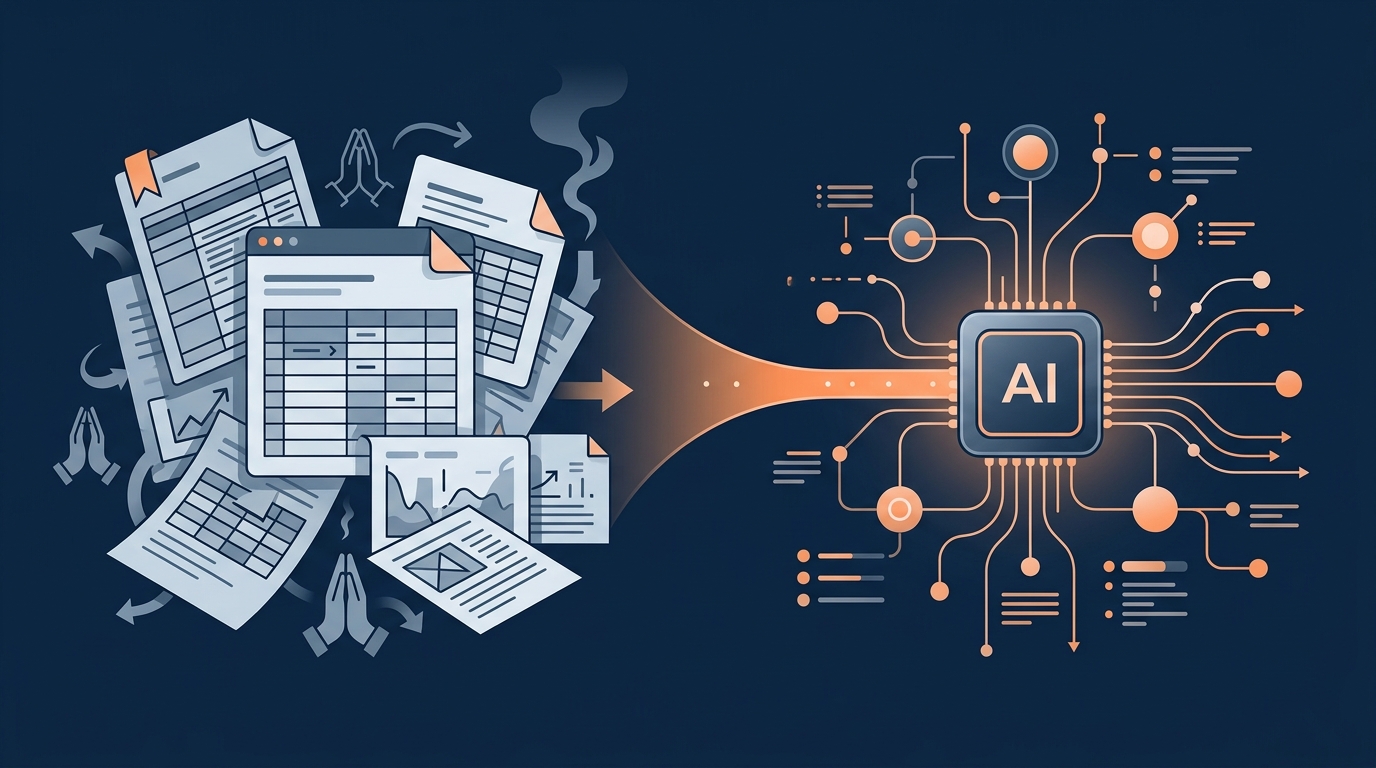
Here's an uncomfortable truth: most small and mid-sized businesses don't have a procurement process. They have a founder who remembers a vendor from a LinkedIn post, a manager who Googles "best shipping company near me" at 11pm, and a Slack thread that passes for an approval chain. It works, until it doesn't. Contracts auto-renew nobody meant to keep. Prices creep up because nobody's comparing quotes. And when someone finally asks "wait, how much are we spending on software," the answer takes three days to piece together. Bigger companies don't have this problem because they've thrown headcount at it. Category managers, procurement software, in-house legal teams reviewing every contract line by line. That's a luxury most SMBs can't afford and honestly shouldn't try to replicate. The good news: you don't need to hire your way into enterprise-grade procurement anymore. You need the right AI copilot doing the grunt work while you make the calls that matter.
Vendor Comparison Without the Guesswork
Ask a procurement copilot to find three alternative shipping providers under a certain monthly cost, and it pulls from your past vendor data and external sources, normalizes the quotes, and flags hidden fees you'd have missed buried in page four of a PDF. It scores vendors on price, reliability, coverage, whatever criteria you set. For RFQs, it drafts the questionnaire, evaluates responses as they land, and tells you which suppliers are worth a second look. Some SMB-focused platforms are cutting RFQ cycle times by 40 to 60 percent this way. That's not a marginal improvement. That's the difference between a sourcing decision taking three weeks or ten days. You still choose the vendor. The AI just stops making you do hours of comparison spreadsheet gymnastics first.
Contract Review That Doesn't Require a Lawyer on Retainer
Every SaaS subscription, every supplier agreement, every NDA is a contract somebody should actually read. In most SMBs, nobody does, because reading contracts isn't anyone's job and lawyers charge by the hour. AI contract review tools now parse these documents, summarize them in plain language, flag unusual liability clauses or missing data protection language, and tell you when something renews or terminates. This turns contract review into a triage system. The copilot handles the routine stuff and flags what actually needs a human, or a lawyer, to look at. You stop paying legal fees to review a $200-a-month SaaS tool, and you stop getting blindsided by an auto-renewal clause buried in section 14.
Approvals That Don't Require a Bureaucracy
Formal approval processes sound like something only big companies need, until you're three years in and nobody can explain why the team is paying for four different project management tools. AI copilots fix this without turning your company into a paperwork factory. Set a policy, something like "all software over a certain dollar amount needs finance approval," and the copilot routes requests, checks budgets, flags duplicates, and catches policy violations before they become a Friday afternoon problem. If a request checks every box, it can auto-approve or pre-fill the paperwork so a human just signs off. You get the audit trail and the spend control without adding a layer of management whose whole job is saying yes or no to purchase requests.
Negotiation Leverage You Didn't Have Before
This is the part most SMBs don't expect. AI tools can now analyze your spend history, benchmark against market pricing, and recommend target discounts or contract terms, the kind of leverage that used to require a dedicated category manager. Some platforms go further, negotiating directly with suppliers within guardrails you set, escalating only when something falls outside the lines. You're not doing the negotiating yourself anymore, but you're still setting the terms.
Why 2026 Is the Right Time
Pricing has come down. Generative AI use in procurement has spiked. And the tools built specifically for SMBs, not scaled-down enterprise software, but products designed for smaller operations from the start, have multiplied. A manufacturer cutting RFQ time in half. A startup managing dozens of SaaS contracts without a legal hire. A growing company routing every purchase through the same intake process instead of a dozen inconsistent ones. None of this requires a procurement department. It requires picking the right copilot and letting it do what it's good at.
The Real Competitive Advantage
You're never going to out-hire a company ten times your size. But you can out-automate the parts of procurement that don't need a human doing them by hand: comparing vendors, reading contracts, chasing approvals. That's not a small thing. That's the gap between a business that controls its spend and one that finds out too late where the money went. Start with one piece, vendor comparison, contract review, or approvals, and let the results tell you where to go next.
Free, about two minutes
How much of your busywork could actually be automated?
Answer eight quick questions and get a personalized PDF: your automation score, your top three opportunities, and what they are worth in hours and dollars. No sales call required.
Get your AI Score